
Kidney
Blood in urine next steps: check urgency, confirm the finding, then choose the right workup.
Blood in the urine can be visible, or it can be found only under a microscope. The right next step depends on urgency, whether blood was confirmed on microscopy, visible versus microscopic blood, infection or stone symptoms, age, smoking history, kidney function, medications, prior radiation, family history, and whether blood persists after an obvious cause is treated.
Updated June 21, 2026
Quick answer
Visible blood in urine should be discussed with a clinician promptly, especially with clots, fever, severe flank pain, or trouble urinating. Microscopic blood is evaluated by risk category: low/negligible-risk patients may only need repeat urinalysis, intermediate-risk patients are commonly evaluated with cystoscopy plus renal and bladder ultrasound, and high-risk patients are commonly evaluated with cystoscopy plus upper-tract imaging such as CT urogram when safe.
What cystoscopy is looking at
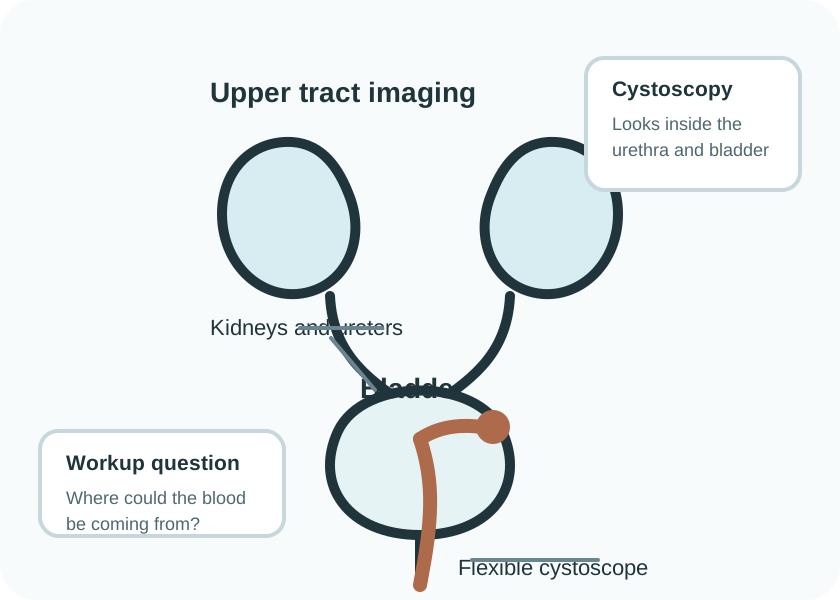
Cystoscopy is a camera exam of the urethra and bladder. Imaging looks higher up, at the kidneys and ureters. A complete blood-in-urine workup may need one, both, or repeat urine testing depending on the patient's risk and symptoms.
Educational illustration only. It does not show a specific patient, diagnosis, or procedure result.
Evidence behind this guide
Risk controls the workup
Current AUA/SUFU guidance separates microscopic hematuria into low/negligible, intermediate, and high-risk groups so low-risk patients are not over-tested while higher-risk patients are not under-evaluated.
Cystoscopy answers the bladder question
Imaging alone can miss bladder findings. When risk justifies a bladder evaluation, cystoscopy lets the urologist inspect the urethra and bladder directly.
Urine markers are not a shortcut for everyone
Urine cytology or validated urine-based markers may help selected intermediate-risk patients decide about cystoscopy, but they are not routine replacements for cystoscopy in low/negligible-risk or high-risk initial evaluation.
Follow-up confirms whether the cause was handled
NIDDK and Mayo Clinic both emphasize that urine testing may be repeated and that treatment should be followed by a check that blood is no longer present when a specific cause is treated.
Blood-in-urine decision toolkit
Use this section to turn a vague finding into a clearer urology conversation. The goal is not to self-diagnose; it is to understand urgency, bring the right records, and ask why a specific test is or is not needed.
You need a care path, not just a cause list
Situation: You saw blood, were told a urine test showed blood, or need to know whether this is primary care, urgent care, or urology.
Why it matters: Most pages list possible causes. The useful next step is matching the situation to the right level of care, the right records, and the right appointment type.
- Should this start with urgent care, primary care, or a urology appointment?
- Which records should I bring so the visit does not repeat the same first step?
- If this is visible, recurrent, or unexplained blood, how quickly should I be seen?
Visible blood in urine
Situation: The urine looked pink, red, tea-colored, or brown, even if it cleared later.
Why it matters: Visible blood has a higher concern level than a single dipstick result. It often needs prompt clinical guidance, especially if it is new, recurrent, or paired with pain, clots, fever, or trouble urinating.
- Should this be handled urgently or scheduled as a urology workup?
- Do I need cystoscopy, upper-tract imaging, urine culture, or urine cytology?
- What should make me go to urgent care or the emergency department?
Costs and scheduling can change the order
Situation: The clinician mentions cystoscopy, CT urogram, ultrasound, urine cytology, culture, or follow-up testing.
Why it matters: Testing can involve separate office, lab, imaging, pathology, facility, contrast, or anesthesia bills. Insurance may also require referral, authorization, network review, or a specific imaging site.
- Which tests are likely to be billed separately from the visit?
- Will cystoscopy be in the office or a facility, and does that change my bill?
- Do I need insurance authorization before CT urogram, MR urogram, cystoscopy, or urine marker testing?
Microscopic blood on a urine test
Situation: Blood was found on urinalysis, but the urine looks normal.
Why it matters: A dipstick result alone is not the definition of microhematuria. A microscopic urinalysis, risk factors, and whether blood persists after infection or another cause is treated all change the next step.
- Was this confirmed on microscopic urinalysis?
- Am I low/negligible, intermediate, or high risk under current guidance?
- Should we repeat the urine test before cystoscopy or imaging?
Blood after UTI, stone symptoms, or exercise
Situation: There is a possible explanation, but the question is whether the blood resolved.
Why it matters: Guideline-based care does not stop at assuming an infection or benign cause. Repeat urinalysis after treatment or resolution can decide whether a risk-based urology evaluation is still needed.
- When should the urine be repeated?
- If blood persists, which risk category am I in?
- Do symptoms point more toward stones, infection, prostate, kidney, or bladder evaluation?
Imaging choice is not one-size-fits-all
Situation: The next step may be ultrasound, CT urogram, MR urogram, noncontrast CT, or retrograde pyelography with other imaging.
Why it matters: CT urogram evaluates the upper urinary tract in a different way than renal ultrasound or a noncontrast stone CT. Kidney function, contrast allergy, pregnancy, radiation concerns, stone suspicion, and cancer risk all affect the safest choice.
- Are we looking for cancer risk, stones, blockage, infection complication, or another cause?
- Is CT urogram safe for me, or should MR urogram or ultrasound be considered?
- If CT/MR contrast is not safe, would retrograde pyelography plus noncontrast imaging or ultrasound answer the question?
Bring this to the urology visit
Bring the basics
- Urinalysis and urine culture results, including microscopy if available.
- Any imaging reports or discs from CT, ultrasound, MRI, or X-ray.
- A medication list, including blood thinners, aspirin, supplements, and recent antibiotics.
- Smoking history, occupational chemical exposure, prior pelvic radiation, and family history of urinary cancers if relevant.
Describe the blood clearly
- Was it visible or only found on a test?
- Was it one time, repeated, or persistent?
- Were there clots, pain, fever, flank pain, burning, urgency, or trouble urinating?
- Did it happen during infection, stone symptoms, heavy exercise, menstruation, or after a procedure?
Common testing paths patients ask about
This table is a patient conversation aid. The actual plan depends on a clinician's risk assessment and medical history.
| Situation | Common next question | Why it matters |
|---|---|---|
| Low/negligible-risk microscopic hematuria | Repeat urinalysis rather than immediate cystoscopy or imaging | Reduces unnecessary testing when the short-term cancer risk is very low. |
| Intermediate-risk microscopic hematuria | Cystoscopy plus renal and bladder ultrasound | Pairs direct bladder inspection with kidney/bladder imaging while limiting radiation and contrast exposure. |
| High-risk microscopic hematuria | Cystoscopy plus axial upper-tract imaging | Evaluates the bladder directly and the kidneys/ureters more completely when risk is higher. |
| Possible stone episode | Whether noncontrast CT or ultrasound fits the stone question | Stone imaging and cancer-risk upper-tract imaging answer different questions. |
| CT contrast is not safe | MR urogram, or retrograde pyelography with noncontrast imaging or ultrasound | Kidney function, contrast reaction, and other risks can change the imaging route. |
Common cause buckets a workup may sort through
Top broad hematuria pages list many possible causes. The workup should turn that list into the right next test instead of leaving patients guessing.
| Cause bucket | Examples | Workup question |
|---|---|---|
| Infection or inflammation | UTI, kidney infection, bladder inflammation, prostate inflammation | Did the blood resolve on repeat urinalysis after treatment? |
| Stone or blockage | Kidney stone, ureteral stone, hydronephrosis, urinary retention | Do symptoms or imaging point toward noncontrast CT, ultrasound, or urgent drainage? |
| Cancer-risk evaluation | Bladder cancer, kidney cancer, upper-tract urothelial cancer, prostate-related bleeding | Do risk factors justify cystoscopy, CT urogram, MR urogram, cytology, or follow-up? |
| Kidney-function disease | Protein in urine, abnormal creatinine, casts, high blood pressure, medical kidney disease | Does nephrology need to be involved while urologic risk is still evaluated? |
| Temporary or misleading causes | Menstruation contamination, vigorous exercise, recent procedure, medication effects, food pigment | Is this truly blood on microscopy, and should the urine be repeated under cleaner conditions? |
Use this as your blood-in-urine hub
Start with urgency. Heavy visible bleeding, clots, fever, severe flank pain, severe weakness, or inability to urinate should be handled promptly rather than through routine appointment shopping.
If you are stable, use the rest of this guide to separate visible blood from microscopic blood, understand why cystoscopy and imaging are different, prepare prior urine and imaging records, and ask what the urologist is trying to rule out.
The goal is a clearer appointment: what was found, whether it persisted, what risk factors matter, which test answers the next question, and what follow-up proves the issue was handled.
Start by confirming what kind of blood was found
A positive dipstick can be a warning sign, but it is not the same as confirmed microscopic hematuria. Current AUA/SUFU guidance defines microhematuria using red blood cells seen on microscopic evaluation of a properly collected urine specimen.
Visible blood is different. If the urine looks red, pink, brown, or tea-colored, especially with clots, pain, fever, or trouble urinating, call a clinician promptly for guidance rather than waiting for a routine search result to answer it.
AUA/SUFU guidance emphasizes microscopy confirmation, initial history and exam, blood pressure, kidney function review, infection follow-up, and risk-based evaluation.
What to ask before scheduling cystoscopy or imaging
Ask whether cystoscopy is being used to inspect the bladder and urethra, whether imaging is being used to evaluate the kidneys and ureters, and whether both are needed for your risk category.
For imaging, ask whether the question is stone, blockage, kidney mass, upper-tract urothelial cancer, infection complication, or another cause. A noncontrast stone CT and a CT urogram are not the same test.
For cost and access, ask whether the visit, urinalysis, urine culture, cytology or marker test, cystoscopy, imaging, contrast, pathology, facility fee, and follow-up are separate charges. If you use insurance, ask whether referral or prior authorization is required before the appointment or test.
When cystoscopy is necessary
Cystoscopy is considered when the bladder and urethra need direct inspection. It may be part of visible-blood evaluation and is recommended in many intermediate-risk and high-risk microscopic hematuria workups.
During office cystoscopy, a urologist passes a thin camera through the urethra to inspect the urethra, prostate channel in men, bladder lining, and the areas where the ureters drain into the bladder. Patients often ask about discomfort, numbing gel, antibiotics if used, burning afterward, brief blood in urine, and when to call after the test.
A cystoscopy with retrograde pyelography is different from a simple office look. Retrograde pyelography uses contrast placed from the bladder up toward the ureters during a cystoscopic procedure, often when CT urogram or MR urogram cannot safely answer the upper-tract question.
How CT urogram, MR urogram, ultrasound, and noncontrast CT differ
A CT urogram is often the upper-tract imaging test discussed for higher-risk hematuria because it can evaluate the kidneys, ureters, and urinary collecting system using multiphase contrast imaging when it is safe.
MR urogram may be used when CT contrast or radiation exposure is a concern, depending on kidney function, implant safety, availability, and the clinical question.
Renal and bladder ultrasound is commonly paired with cystoscopy for intermediate-risk microscopic hematuria. It avoids radiation and contrast, but it does not answer every upper-tract question the same way a CT urogram can.
A noncontrast CT is often used when a stone is suspected. It is not the same test as a CT urogram, so patients should ask what the clinician is trying to rule out: stone, blockage, mass, urothelial cancer, infection complication, or another cause.
Where urine cytology and biomarkers fit
Urine cytology and urine-based tumor markers can sound appealing because they are noninvasive, but they do not replace the full workup for every patient.
Current guidance allows selected, appropriately counseled intermediate-risk patients who want to avoid cystoscopy to discuss cytology or validated urine-based markers to help decide whether cystoscopy is useful. Ultrasound still remains part of that pathway, and persistent blood later may still lead back to cystoscopy.
For low/negligible-risk or high-risk initial evaluations, markers are not a routine substitute for the recommended risk-based approach.
The practical patient question is not 'which marker is newest?' It is 'would this result safely change whether I need cystoscopy, imaging, or follow-up?'
When to involve a kidney specialist too
Some urine findings point beyond the urinary tract lining. Protein in the urine, abnormal kidney function, high blood pressure, casts on microscopy, or other signs of medical kidney disease can justify nephrology involvement.
That does not automatically replace a urology workup. If hematuria risk still calls for urologic evaluation, both tracks may be needed: kidney-function evaluation and urinary-tract evaluation.
After a negative workup
A negative evaluation is reassuring, but the follow-up plan should be explicit. Ask whether and when urinalysis should be repeated, what symptoms should trigger a return, and whether persistent or recurrent microscopic blood changes the plan.
If visible blood develops after a prior negative workup, or if the amount of blood increases or new urinary symptoms appear, patients should call for updated guidance instead of assuming the old evaluation still answers the new situation.
Common questions
Does everyone with microscopic blood in urine need cystoscopy?
No. Current AUA/SUFU guidance uses risk categories. Low/negligible-risk patients may be managed with repeat urinalysis first, while intermediate- and high-risk patients are more likely to need cystoscopy as part of the workup.
What imaging is used for blood in urine?
It depends on risk and the suspected cause. Options may include renal and bladder ultrasound, CT urogram, MR urogram, noncontrast CT when stones are suspected, or retrograde pyelography with other imaging when CT/MR urogram is not suitable.
Is a CT urogram the same as a CT scan for kidney stones?
No. A CT urogram uses a contrast-timed protocol to evaluate the kidneys, ureters, and collecting system. A noncontrast CT is commonly used for suspected stones. Patients should ask which question the test is meant to answer.
Can urine markers replace cystoscopy?
Usually not. In selected intermediate-risk patients who understand the tradeoff, urine cytology or validated urine-based markers may help with the decision about cystoscopy. They are not routine replacements for cystoscopy in high-risk initial evaluation.
What should I do if blood in urine happened after a UTI?
Ask when urinalysis should be repeated after treatment. If blood persists or the cause is unclear, a clinician may recommend risk-based urology evaluation.
When is blood in urine urgent?
Seek prompt care for heavy visible bleeding, large clots, inability to urinate, fever, severe flank pain, severe weakness, or rapidly worsening symptoms.
Which kind of urologist should I see for blood in urine?
Many general urologists evaluate blood in urine. If a bladder tumor, kidney mass, upper-tract cancer concern, or complex stone problem is found, the next step may involve a urologic oncologist, endourologist, or another focused urology specialist.
What should I bring to a blood-in-urine appointment?
Bring urinalysis and urine culture results, microscopy results if available, imaging reports or discs, a medication list including blood thinners, smoking or occupational exposure history if relevant, and a short timeline of when the blood appeared and whether it came with pain, fever, clots, or urinary symptoms.
Related decision guides
Urology care paths
Use the care-path hub to connect blood in urine with urgency, cystoscopy, imaging, cost, and appointment routing questions.
Blood in urine: when to see a urologist
Use this symptom guide when you are deciding how urgent the blood-in-urine finding is.
Cystoscopy near me
Use this when a clinician recommends a bladder scope and you need setting, scheduling, and follow-up questions.
Cystoscopy cost with insurance or without insurance
Patients often ask about cystoscopy logistics, billing pieces, and what to ask before the appointment.
CT urogram cost and insurance questions
Use this when the blood-in-urine workup may involve contrast imaging, authorization, or imaging-center billing questions.
How much does a urologist visit cost?
Use this when the workup may include a consultation, urine testing, cystoscopy, imaging, or follow-up bills.
Bladder cancer urologist near me
Use this if cystoscopy, imaging, cytology, or pathology raises concern for a bladder tumor or cancer workup.
Recurrent UTI specialist
Use this when repeated infection symptoms, culture history, or UTI-like symptoms overlap with blood in urine.
Kidney stone treatment near me
Stone symptoms, flank pain, or a stone seen on imaging can change the urgency and testing path.
Urologist appointment in New Jersey
Use the appointment guide when a clinician recommends urology follow-up and you need records, referral, insurance, and visit-fit questions.
Find New Jersey urologists
Use the directory when a clinician recommends urology evaluation and you need a local appointment path.
What patients are usually trying to decide
Patients may be trying to decide whether pain, imaging, repeated stones, infection, or a renal mass needs urgent or scheduled care.
A urologist may review imaging, kidney function, stone history, obstruction, infection risk, mass size, and procedure options.
Where this fits in urology care
This page is part of Kidney and renal, under Kidney infection, blood in urine, and imaging findings. Use it to understand the care area before a visit, then talk with a urologist about whether it fits your situation.
Questions to ask before scheduling
- Am I a candidate for this procedure or category of care?
- What testing or records should I bring to the visit?
- What are the main alternatives and why might one fit better?
- What should make me call urgently instead of waiting?
New Jersey appointment path
Talk with a urologist about Blood in urine workup
Start with the practice directly. Do not send sensitive medical details through public forms; the office can move the conversation into the right intake process.